
PowerGrid was the top loser in the Sensex pack, shedding over 1 per cent, followed by Bajaj Finserv, ICICI Bank, HDFC, NTPC, HUL and L&T. On the other hand, Infosys, Reliance Industries, Nestle India and Martui were among the gainers.

Executives of Indian airlines said that the drop is primarily for flights to major metro cities like Delhi, Mumbai, Hyderabad, Bangalore, which are the prime revenue generators on the domestic front.

Omkeshwar Singh, head, Rank MF, a mutual fund investment platform, answers your queries.

HDFC and HDFC Bank's merger - touted as India's biggest-ever corporate merger - pumped up shares of the two entities on the bourses. Shares of Housing Finance Development Corporation (HDFC) skyrocketed 9 per cent while those of HDFC Bank zoomed 10 per cent. In comparison, the benchmark S&P BSESensex and the Nifty50 indices settled 2.2 per cent higher on Monday.

Omkeshwar Singh, head, Rank MF, a mutual fund investment platform, answers your queries.

Omkeshwar Singh, head, Rank MF, a mutual fund investment platform, answers your queries.

'Macro headwinds are rising for Indian equities in the form of rising commodity prices, especially oil, depreciating rupee, fiscal challenges, election-related uncertainty and upside risks to inflation'

Omkeshwar Singh, head, Rank MF, a mutual fund investment platform, answers your queries.

Nikunj Saraf, Vice President Choice Wealth, answers your queries.

ONGC was the top gainer in the Sensex pack, rallying around 6 per cent, followed by NTPC, Tata Steel, ICICI Bank, ITC, Titan and Bajaj Auto. On the other hand, Axis Bank, M&M, Tech Mahindra, Asian Paints and Bajaj Finserv were among the laggards.

Bajaj Finserv was the top loser in the Sensex pack, shedding around 3 per cent, followed by Bajaj Auto, Bajaj Finance, L&T, Asian Paints, Dr Reddy's, ICICI Bank, HDFC Bank and RIL. NSE Nifty finished 101.45 points down at 14,929.50.

Omkeshwar Singh, Head, Rank MF, a mutual fund investment platform, answers your queries

Sudhanshu Singh, director IBBM, MM Securities, answers your mutual fund queries.

Lenders had filed 1,251 cases to recover Rs 24,765.5 crore. Wilful defaulters are the entities that do not pay back money despite the ability to do so. Defaulters above Rs 1 crore were considered for this exercise.

Omkeshwar Singh, Head, Rank MF, a mutual fund investment platform, answers your queries.
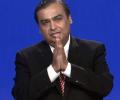
However, in the last few sessions, the stock of Mukesh Ambani-controlled Reliance Industries Limited (RIL), hit its 52-week low level of Rs 2269.75, and has been one of the worst performers among the Sensex pack thus far in calendar year 2023 (CY23). Thus far in CY23, RIL has tanked nearly 11 per cent as compared to a fall of around 5 per cent in the S&P BSE Sensex. The fall in the stock, according to Gaurang Shah, senior vice-president at Geojit Financial Services is mostly due to the overall dip in the market sentiment, which in turn has impacted large-caps, including RIL.

The HDFC duo was the top laggard in the Sensex pack, shedding nearly 4 per cent, followed by PowerGrid, Tech Mahindra, ICICI Bank, ONGC, Kotak Bank, Asian Paints, Infosys and Reliance Industries. NSE Nifty slumped 154.40 points to 14,690.70.
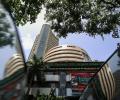
Infosys was the top gainer in the Sensex pack, rising around 3 per cent, followed by Bajaj Auto, SBI, ICICI Bank, HCL Tech, Titan and Asian Paints. NSE Nifty rose 19.85 points or 0.14 per cent to 13,760.55 -- its new closing record.

M&M was the top loser in the Sensex pack, shedding around 4 per cent, followed by SBI, ICICI Bank, Axis Bank, IndusInd Bank, ITC and NTPC. NSE Nifty declined 265.35 points to 14,549.40.

Omkeshwar Singh, Head, Rank MF, a mutual fund investment platform, answers your queries.

Equity benchmarks mustered gains for the first time this week on Thursday as investors piled into the recently-battered metal, bank and IT stocks amid expiry of monthly derivative contracts. Snapping its three-session losing streak, the 30-share BSE Sensex rallied 503.27 points or 0.94 per cent to settle at 54,252.53. On similar lines, the broader NSE Nifty gained 144.35 points or 0.90 per cent to end at 16,170.15.

ICICI Bank was the top gainer in the Sensex pack, soaring over 6 per cent, followed by SBI, HDFC, PowerGrid, Sun Pharma, IndusInd Bank, Titan, Bajaj Auto and HDFC Bank. On the other hand, NTPC, Reliance Industries, Nestle India, HCL Tech and Infosys were among the laggards.

Bharti Airtel was the top loser in the Sensex pack, shedding around 4 per cent, followed by Maruti, Bajaj Finance, HUL, ICICI Bank and Kotak Bank. On the other hand, Tata Steel, NTPC, Sun Pharma, Nestle India, Reliance Industries and TCS were among the gainers.

Omkeshwar Singh, head, Rank MF, a mutual fund investment platform, answers your queries.

Infrastructure stocks are once again gaining traction.

IndusInd Bank was the top loser in the Sensex pack, tanking over 8 per cent, followed by Bajaj Finance, SBI, ONGC, Titan, M&M, Bajaj Finserv, ICICI Bank and Axis Bank. NSE Nifty plunged 524.05 points to finish at 14,310.80.

Omkeshwar Singh, Head, Rank MF, a mutual fund investment platform, answers your mutual fund queries.

Bajaj Finserv was the top gainer in the Sensex pack, rallying around 7 per cent, followed by Bajaj Finance, HDFC, L&T, ICICI Bank, Sun Pharma and NTPC. On the other hand, Tech Mahindra, ITC and M&M were the laggards.

Omkeshwar Singh, head, Rank MF, a mutual fund investment platform, answers your queries.

The National Commission ruled that a person must opt for a policy and submit the proposal form after acquainting himself with the terms and scope of coverage to determine where it would be suitable and adequate.

Nikunj Saraf, Vice President Choice Wealth, answers your queries.

HDFC was the top gainer in the Sensex pack, surging around 5 per cent, followed by Kotak Bank, ICICI Bank, SBI, HDFC Bank and Axis Bank. On the other hand, Titan, Nestle India, Ultratech Cement and Sun Pharma were among the laggards. NSE Nifty surged 128.05 points to its all-time peak of 16,246.85.

Omkeshwar Singh, head, Rank MF, a mutual fund investment platform, answers your queries.

Mutual fund (MF) houses have started realigning their overseas product offerings after the Securities and Exchange Board of India (Sebi) advised them to stop subscriptions. PPFAS Asset Management has decided to suspend transactions in Parag Parikh Flexi Cap Fund with effect from February 2, 2022. Though new lump-sum and systematic investment plans (SIPs) will not be accepted, existing SIPs and systematic transfer plans (STPs) will continue.

As banks' chase for customers to collect cheap deposits is not fructifying, they are forced to offer inflation-beating real interest rates on fixed deposits now, and state-run banks led by Punjab & Sind Bank tops the chart offering 8-8.50 per cent per annum deposit rate. Banks are forced to offer inflation-beating deposit rates for a tenor ranging from 200 to 800 days as credit growth has been far outpacing deposit mobilization throughout this fiscal, leading to a funding crunch.

Omkeshwar Singh, Head, Rank MF, a mutual fund investment platform, answers your queries.

Equity benchmark Sensex tumbled over 575 points on Thursday, tracking heavy losses in index-heavyweights HDFC twins, TCS and Reliance Industries amid a weak trend in global markets. Declining for the third straight day, the 30-share Sensex slumped 575.46 points or 0.97 per cent to settle at 59,034.95. During the day, it tanked 633.06 points or 1.06 per cent to 58,977.35. The broader Nifty-50 also declined 168.10 points or 0.94 per cent to close at 17,639.55.

In the year to date, 61 PSUs have lost an average of 22 per cent, with five companies losing more than half their share value. The BSE PSU index is down 10.6 per cent.

Axis Bank was the top gainer in the Sensex pack, rising around 3 per cent, followed by Sun Pharma, Reliance Industries, ONGC, HDFC, ICICI Bank, Kotak Bank and Bharti Airtel. On the other hand, Infosys, IndusInd Bank, HCL Tech, Nestle India and Tech Mahindra were among the laggards.

Net investments in active equity mutual fund (MF) schemes rose to Rs 7,300 crore in December after declining to a 21-month low of Rs 2,260 crore in November, shows the latest data from the Association of Mutual Funds in India (Amfi). The rebound in net inflows was driven by a surge in investments and moderation in redemptions. While the inflows into these schemes rose 5 per cent month-on-month (MoM) in December, the redemptions were 14 per cent lower compared to November.
